


Foundation
What would you need to know if the ordinary things of life started mutating at a fast pace around you: plants, animals, people, society, and language? What if reality or evolution was put on “fast-forward”?
What would you need to know if the ordinary things of life started mutating at a fast pace around you: plants, animals, people, society, and language? What if reality or evolution was put on “fast-forward”?

You and your team are on a mission to trade with a remote tribe deep in the jungle. What do you need most: transportation, paperwork, or liquor and trinkets?
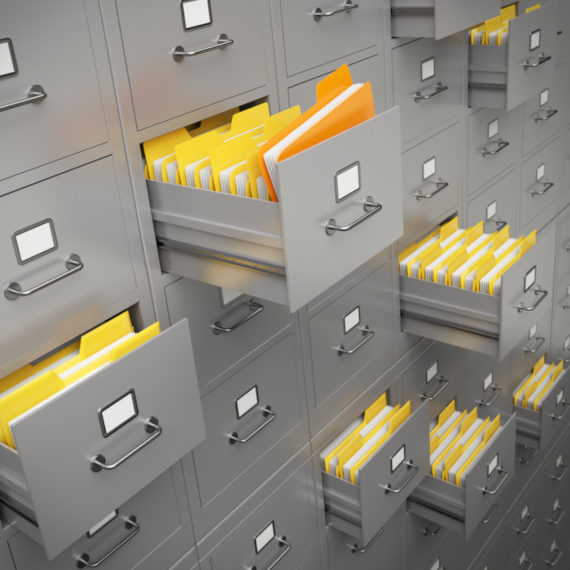
How valuable are the services provided by your website(s)? Would your clients, customers, or even employees think twice before leaving your company because of these services? How naturally do they use them? How much would it cost them to be deprived of your site? What does your site do for your staff?

Let's think the unthinkable. What if a disaster destroyed your offices? What if an epidemic outbreak* stranded your employees at home? What if a disastrous CPU vulnerability, a bug or a Windows® update incapacitated all your PC's? What would be your Plan B?

Would you go to a doctor who could only prescribe one medicine? Or go to a doctor whose medical school and practice were owned by a Big Pharma lab?

It is somewhat easy to estimate the cost-benefit of the products you resell or that of factory machinery, but what about everything else? What is the simplest and most reliable predictor of the long-term cost and value of a third-party solution?

When you walk out of your house to bring your children to the playground, you do not leave the door open behind; you keep an eye on who might approach your offspring. You are protected by the neighborhood you selected, by the police, by laws, and by shared values. The Internet is wide open, lawless, global, and opaque. How do you protect your business on the Internet?

Workgroup or Domain? When does it start to make sense to implement Active Directory?
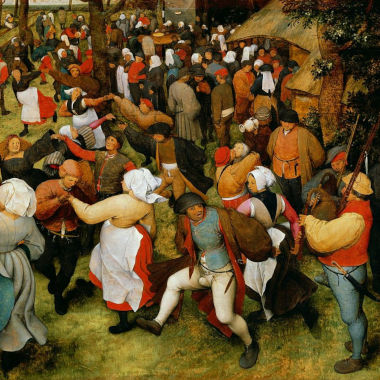
In-house vs outhouse... When does it make sense to use an outhouse?

Should your IT staff "speak" HIPAA, PCI, SOC, ITAR, EAR, GDPR and the other standards and regulations that may apply to your industry?
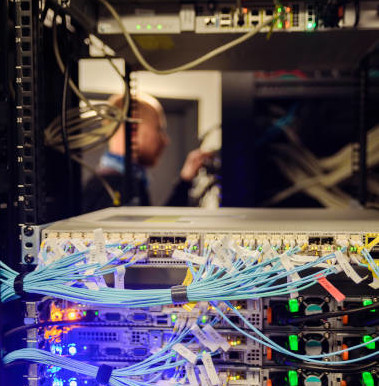
How long do your servers and personal computers last? How much do brand idiosyncrasies and engineered obsolescence affect your park of computers and servers? Can you diagnose and repair, or do you merely repurchase, replace and reinstall software?

Worse still: If disaster struck the Internet, your cloud shares, or the cloud-based Line of Business application(s) that everybody uses in your industry, would you lose your customers or would you be the last competitor standing?

What if a remote device, accessing corporate resources behind your firewall or in the cloud, became rogue or fell into the wrong hands? How can you prevent this from ever happening?

Are you ready for fast growth? If success, a large influx of cash or an acquisition propelled you to the next level, would your IT sustain the load: new employees, new locations, new needs?
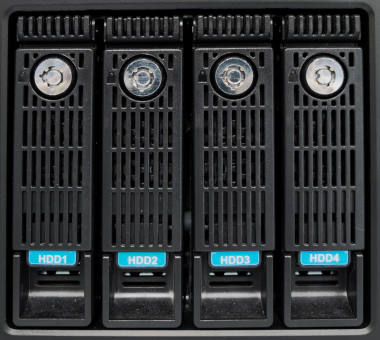
Backups are like insurance, a painful necessity. In a nutshell, how do you do them right and cheap?

How many third-party entities have access to your data through software installed in your machines? How many host sensitive information on shared servers or multi-tenant infrastructure that you do not control? How many have already lost, through data breaches, the passwords that your staff uses (or reuses) everywhere?

How can you give us Active Directory for free? Isn't this Microsoft's® bread and butter, the heart of Windows® Server? What's the catch?

What is a concierge CIO and why should you get one?

Why is the IT of small and midsize companies so costly in time wasted and dollars spent? What is the fix?

What would you discover if you asked IT employees or your MSP to write down everything they do throughout the day?
How much redundancy and resilience is built into your IT infrastructure? What do you do when prolonged or repeated Internet outages occur? What if your firewall fails? Your VPN? Your mail server? Your backups? A domain controller? A server? A drive?

How well are your websites or hosted applications protected (CRM, ERP, RMM, LOBs, Web-based services to clients, Private Cloud storage and chat/collaboration, Mail)? Do they contain data which by law (HIPAA, PCI, GDPR, etc.) is entitled to special protection? Would the data still be readily accessible if the server went down?

What do public cloud computing and the 2008 subprime bond market have in common?
Should you use dedicated servers, or should you rely on the public cloud for your website, business applications, and online services you sell to your clients?

When does it make sense to use proprietary technology? Should you favor “enterprise” technologies over commodity alternatives?

How prominent a role should Time Travel play in your arsenal of Information Technologies: very prominent, somewhat prominent, or whatever?

Every creature must contend with predators. Every life form is in one way or another a food source for another. Life eats life. How do you defend yourself in the tech kingdom? What kind of animal are you there? What's your security paradigm?

What would it take to knock your network, your Website server or self-hosted applications offline?

Citrix® makes Windows® client-server applications accessible from a click in a site while preserving their familiar desktop look and feel. It provides “traditional” software vendors with a means to "lease" their solutions as a service without having to rewrite their code for the Web. On the client side, it frees you from the hassle of maintaining a Windows® Server and apps. This is great, but how so?

You sometimes have to deal with bad apples in your staff, or with customers who won't pay. You may be able to sniff them out early. How do you do this with IT? How do you "nip" issues before they occur and costs before they are incurred? How do you do Lean IT?

If you were an electric utility recruiter hiring temps to work on power lines, which would you rather hire: the ones who are wary of electricity, or the ones who are not? Now, if you were recruiting a midsize business IT Manager or CIO and asked applicants whether they are wary of custom code, which would you hire: the one who loves coding, or the one who dreads it?

Could an employee or anybody else having access to your premises plug a device into your network - say a Wi-Fi hotspot or a thumb drive - and open your network to outsiders?

Your cell phone is like a secretary you carry wherever you go. It knows where you are and where you will be. It remembers what you tell it. It can even type. Isn't it time you give it more serious work?

Why does traditional software seem so needlessly complicated when web-based, cloud, and mobile alternatives seem so much simpler?

How do you select a printer, a scanner?

Do you still receive those pesky emails that appear to come from somebody you know but are really sent from an unknown address or domain?

What do BYOB and BYOD have in common?

Tip: Ads represent over 50% of your network traffic. How do you keep advertisements and other time wasters from interfering with your network and productivity? How do you keep ads, Big Media, and social media off your property?

Technology can allow people much freedom. But what is the true price of this freedom? Hard work, maybe?

Do you know what your users can do or access on your network? Who can make modifications? If a user's computer dies, do you know what applications need to be installed on his new machine?

What will free us from decades of accumulated complexity and make the computer simple again?

In case you cannot fully fathom the pertinence of our defense of Open Source technology, try one with numbers... If every piece of Open Source software vanished overnight, what would the world's companies have to spend to rebuild the code their businesses already run on? $88B, $880B, or $8.8T?